
POLL: CARMAKERS’ SUPPORT FOR CLEAN CAR ROLLBACKS ALIENATES CUSTOMERS 1
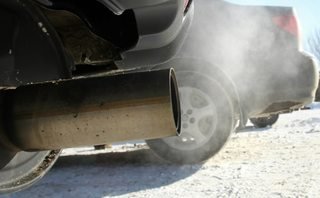
Total Views: 19 By Suzanne Potter, California News Service Photo: Tailpipe emissions, CC by SA via Bing January 29, 2020 (Sacramento) — A new poll suggests carmakers that support the Trump administration’s attempt to roll back clean-car emission standards may be undermining their standing with their customers. Toyota, General Motors, Fiat Chrysler, Subaru, Nissan, Mazda, Hyundai, Kia, and Mitsubishi support the feds in a lawsuit to prevent California from establishing tougher emissions standards than those set by the federal government. Pollster Matt George said his firm questioned 1,000 Toyota owners and found the company’s reputation takes a big hit once people find out about the lawsuit. “In terms of the perception of Toyota being a ‘green and sustainable company that takes care to be environmentally friendly,’ at the outset of the poll, 90% of Toyota consumers would agree with that statement. At the end of the poll, after they found out more information, 55% agree,” George said. “So, that’s a pretty significant drop.” Other car companies have taken a different approach. Volkswagen, Ford, BMW and Honda have agreed to adhere to California’s stronger standards, which have been adopted by 14 other states. Toyota did not immediately respond to a request for comment. The Trump administration has said the lower standards will translate to lower sticker prices. However, Shannon Baker-Branstetter, manager of cars and energy policy for Consumer Reports, said the government’s own analysis shows the lower emissions standards would hurt fuel economy – and cost drivers an average of $1,400 more a year in gas. “The stronger fuel economy and greenhouse gas emission standards improve both consumer pocketbooks and reduce pollution, and so that really is a win-win,” Baker-Branstetter said. “However, rolling back the rule will increase pollution, as well as cost consumers money.” Clean-air advocacy groups are hoping more public awareness will pressure the feds to withdraw the lawsuit and allow California to keep its high standards. George said the poll showed only 15% of Americans are following the lawsuit closely – and that number is only slightly higher in California. “The number in California is only 20% – only 5% higher than the national average, for a lawsuit that is going to directly impact emissions standards within that state,” George said. The poll also found 1 in 4 Toyota owners, particularly those ages 18-34, would consider switching brands after hearing about the company’s stance on clean-car standards. Printer-friendly version
1 viewsCA ATTORNEY GENERAL BECERRA ANNOUNCES SETTLEMENT WITH GENERAL MOTORS OVER DEFECTIVE IGNITION SWITCH 2.8K
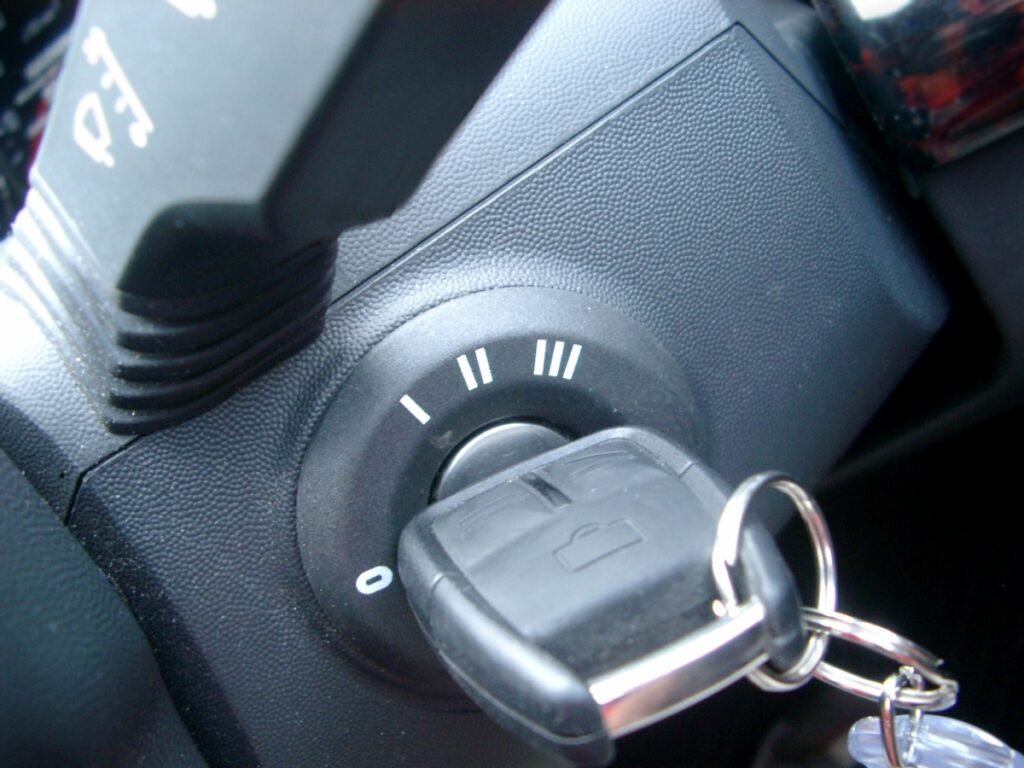
Total Views: 37 East County News Service October 20, 2017 (Sacramento) – California Attorney General Xavier Becerra has announced a $120 million multi-state settlement with General Motors Company (GM) over allegations that the company concealed safety issues related to defective ignition switches in GM vehicles. California will be receiving over $7 million and GM must cease making misrepresentations to consumers regarding unsafe vehicles. The settlement, reached among the attorneys general of 49 states and the District of Columbia and GM, concludes a multistate investigation into the auto manufacturer’s failure to disclose in a timely manner known safety defects associated with unintended key-rotation and/or ignition-switch related issues in several models and model years of GM vehicles. “What GM did is inexcusable – it took nearly a decade for the company to inform consumers that its ignition switches were defective,” said Attorney General Becerra. “We are holding GM accountable today for this blatant violation of the law, which threatened the lives of millions of Americans. All companies should be put on notice: the California Department of Justice has zero tolerance for those who put profits over people.” In 2014, GM issued seven vehicle recalls in response to unintended key-rotation and/or ignition-switch related issues, which have affected over 9 million vehicles in the U.S. The recalls involved a defective ignition switch which, under certain conditions, could move out of the “Run” position to the “Accessory” or “Off” position. If this occurs, the driver experiences a loss of electrical systems, including power steering and power brakes. If a collision occurs while the ignition switch is in the “Accessory” or “Off” position, the vehicle’s safety airbags may also fail to deploy, increasing the risk of serious injury or death in certain types of crashes in which the airbag was otherwise designed to deploy. The States alleged that certain employees of GM knew as early as 2004 that the ignition switch posed a safety defect because it could cause airbag non-deployment. However, GM personnel decided it wasn’t a safety concern and delayed making recalls. GM continued to market the reliability and safety of its motor vehicles which were equipped with this defective ignition switch. The states alleged that these actions were unfair and deceptive and that the automaker’s actions violated state consumer protection laws, including California’s Unfair Competition Law (Bus. & Prof. Code, § 17200 et seq.) and False Advertising Law (Bus. & Prof. Code, § 17500 et seq.) Under a stipulated judgment, which will be presented to the Los Angeles Superior Court for approval, GM shall: Not represent that a motor vehicle is “safe” unless they have complied with the Federal Motor Vehicle Safety standards applicable to the motor vehicle at issue. Not represent that certified pre-owned vehicles that GM advertises are safe, have been repaired for safety issues, or have been subject to rigorous inspection, unless such vehicles are not subject to any open recalls relating to safety or have been repaired pursuant to such a recall. Instruct its dealers that all applicable recall repairs must be completed before any GM motor vehicle sold in the U.S. and included in a recall is eligible for certification and, if there is a recall on any certified pre-owned vehicle sold in the U.S., the required repair must be completed before the vehicle is delivered to a customer. A copy of the consent judgment is attached to the electronic version of this release at oag.ca.gov. Printer-friendly version
2.8K viewsRECALL ON 4.7 MILLION 2001-2007 VEHICLES DUE TO DEFECTIVE AIRBAGS 5.9K
Total Views: 29 Consumer urged to take immediate action October 22, 2014 (Washington D.C.) — The National Highway Traffic Safety Administration urges owners of certain Toyota, Honda, Mazda, BMW, Nissan, and General Motors vehicles to act immediately on recall notices to replace defective Takata airbags. This is the latest in a series of recalls that now span from 2001 to 2013. The airbags can blow apart, sending shrapnel into front passengers’ faces and chests. Several deaths and serious injuries have been reported. The bags are considered so dangerous that repair shops are being told to disconnect bags while awaiting replacement parts. The risk is highest in humid areas. A list of vehicles impacted is published below. In addition, consumers uncertain whether their vehicle is impacted by the Takata recalls, or any other recall, can check on www.safercar.gov/vinlookup. On the site, consumers can search by their vehicle identification number (VIN) to confirm whether their individual vehicle has an open recall that needs to be addressed. In addition, consumers can sign-up for NHTSA recall alerts, which go out before recall letters are mailed by the manufacturers to the affected owners. Affected vehicles, by manufacturer, impacted by the latest round of recalls Involving Takata airbags (See website above for models in the previous recalls): Toyota: 778,177 total number of potentially affected vehicles 2002 – 2004 Lexus SC 2003 – 2004 Toyota Corolla 2003 – 2004 Toyota Corolla Matrix 2002 – 2004 Toyota Sequoia 2003 – 2004 Toyota Tundra 2003 – 2004 Pontiac Vibe Honda: 2,803,214 total number of potentially affected vehicles 2001 – 2007 Honda Accord (4 cyl) 2001 – 2002 Honda Accord (6 cyl) 2001 – 2005 Honda Civic 2002 – 2006 Honda CR-V 2003 – 2011 Honda Element 2002 – 2004 Honda Odyssey 2003 – 2007 Honda Pilot 2006 – Honda Ridgeline 2003 – 2006 Acura MDX 2002 – 2003 Acura TL/CL Nissan: 437,712 total number of potentially affected vehicles 2001 – 2003 Nissan Maxima 2001 – 2003 Nissan Pathfinder 2002 – 2003 Nissan Sentra 2001 – 2003 Infiniti I30/I35 2002 – 2003 Infiniti QX4 2003 – Infiniti FX Mazda: 18,050 total number of potentially affected vehicles 2003 – 2004 Mazda6 2004 – Mazda RX-8 BMW: 573,935 total number of potentially affected vehicles 2000 – 2005 3 Series Sedan 2000 – 2006 3 Series Coupe 2000 – 2005 3 Series Sports Wagon 2000 – 2006 3 Series Convertible 2001 – 2006 M3 Coupe 2001 – 2006 M3 Convertible General Motors: 133,221 total number potentially affected vehicles 2002 – 2003 Buick LeSabre 2002 – 2003 Buick Rendezvous 2002 – 2003 Cadillac DeVille 2002 – 2003 Chevrolet Trailblazer 2002 – 2003 Chevrolet Impala 2002 – 2003 Chevrolet Monte Carlo 2002 – 2003 Chevrolet Venture 2002 – 2003 GMC Envoy 2002 – 2003 GMC Envoy XL 2002 – 2003 Oldsmobile Aurora 2002 – 2003 Oldsmobile Bravada 2002 – 2003 Oldsmobile Silhouette 2002 – 2003 Pontiac Bonneville 2002 – 2003 Pontiac Montana Information on Consumer Recalls and VIN Fact Sheet Printer-friendly version
5.9K viewsGM ANNOUNCES RECALLS OF MILLIONS OF VEHICLES 3.5K
Total Views: 31 March 17, 2014 (San Diego’s East County) – General Motors has announced recalls of numerous vehicles due to serious safety issues including brake, ignition, and most recently, airbag problems. The latest is a recall of 1.2 million sports utility vehicles, or SUVs due to wiring problems with side airbags. These airbags may fail to inflate during an accident, though thus far no injuries have occurred, the company says. The models being recalled for airbag issues are GMC Acadias and Buick Enclaves made from 2008 to 2013, Chevrolet Traverse models from 2009 to 2013, and Saturn Outlooks from 2008 to 2010. In addition, GM is recalling 64,000 Cadillac XTS sedans made in 2013 and 2014 due to brakes that have overheated and caused at least two fires. These recalls is separate from a recently announced recall of 1.6 million vehicles due to ignition switch problems, which have been linked to a dozen deaths. Printer-friendly version
3.5K views