
LA MESA CITY COUNCIL APPROVES CONTROVERSIAL URBN LEAF DISPENSARY, REVERSING PRIOR DENIAL 2.9K
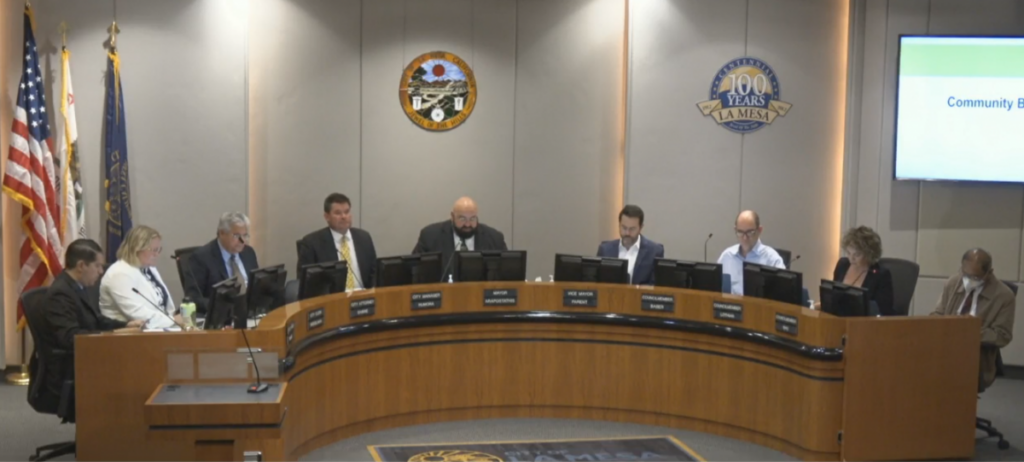
Total Views: 31 By Henri Migala August 12, 2022 (La Mesa) — The La Mesa City Council voted Tuesday to approve a Conditional Use Permit and allow Urbn Leaf to build a cannabis (marijuana) dispensary at 7901 Hillside Drive. The Council unanimously voted 5-0 to repeal its earlier approval of an appeal that had blocked the project, after applicant Urbn Leaf filed a legal challenge. BACKGROUND The Urbn Leaf dispensary project was initially approved, with conditions (an elevator tower and 36-inch box trees) by the Design Review Board on August 9, 2021, and approved by the Planning Commission Hearing on October 6, 2021. An appeal was filed on October 20, 2021 by Dana Stevens, Executive Director of CASA (Community Action Service Advocacy, formerly Communities Against Substance Abuse). Stevens asserted, in her appeal, that the proposed project violates Chapter 24.23, which has a purpose of limiting impacts on neighborhoods. Stevens contended that the dispensary is unsuitable for Hillside Drive, violates path of travel rules, and sets precedent for commercial development adjacent to residential areas. The developer aims to demolish and replace a single-family home, on a lot adjacent to other residences and across the street from the La Mesa Springs shopping center. At the February 8 hearing, La Mesa City Council voted 3-2 to uphold the appeal filed by Stevens and block approval of the proposed dispensary. City staff were instructed to revisit the proposed project and to bring back their findings to the Council after Urbn Leaf filed a petition with the Superior Court seeking judgment and a writ of mandate requiring the City to issue the requested CUP. Kerry Kusiak, Director of Community Development, presented the findings to the City Council at the hearing on Tuesday, August 9, 2022. City staff, since the project is technically in compliance with city law, recommended that the Council uphold the Planning Commission’s approval of the project, deny the appeal, and ratify the Design Review Board’s approval. Kusiak told Council that the site has been unoccupied and in need of redevelopment, and that the license, if issued, can be suspended or revoked for non-compliance. Councilperson Lothian asked Kusiak if everything in the proposal follows the law and is within the law, does the Council had any power or authority to block it? Kusiak responded that according to the advice he received from the city’s attorney, there was not, which is why their recommendation was to approve the proposal. COMMUNITY RESPONSE Dana Stevens, Executive Director of CASA, who filed the initial appeal, was allowed to make her public comments. Stevens pointed out that the applicant, Urbn Leaf, had done nothing to address the complaints originally filed. “All the concern we brought forward to you in February are still the same,” said Stevens. “We are significantly concerned about THIS use, at THIS location.” Stevens expressed concern that the proposed project is in a residential neighborhood. “Even more concerning in this paragraph is the reference to the Mezuda Traffic Consulting Letter,” stated Stevens. “The Mezuda letter was not made available during the initial Planning Commission meeting nor as part of the staff report to the council in February.” Stevens pointed out that the traffic study was conducted in 2017, before the opening of the 230-unt Jefferson housing project and before the opening of Cookies “ which is not, by the way, a medical marijuana retailer. Just give them a call and ask. They’ll proudly tell you they are ‘adult use recreational,’” she added. Stevens reported that the traffic study cites nonexistent and that the study concluded there would be nearly 200 additional car trips daily to an area where the report sites “I would propose that this 2017 traffic report is invalid and a more current traffic report needs to be conducted,” stated Stevens. “Second, the staff report claims that the project is consistent with the general plan as it would introduce “uncommon retail goods.” But with 18 adult use recreational and medical marijuana retailers, and fewer than 13 actual pharmacies in the city of La Mesa, marijuana is hardly an uncommon good in La Mesa, which is now known as the “marijuana Mecca,” Stevens said. She thanked Councilmembers for their “courage” in previously upholding her appeal, adding, “Urbn Leaf is a bully. They have made $5 million suing. She noted that La Mesa currently has “one marijuana retail outlet for every 3,000 residents, and that includes residents of all ages. That includes residents not even old enough to consume. That’s more than the ABC allows for liquor stores. So, there is plenty of access. It’s really just this use, at this location. “We have never come to you about any of the other applicants,” said Stevens, “but this is egregious in this neighborhood. It’s inappropriate.” She ended her presentation by suggesting the Council put a measure on the ballot to revise Measure U, the initiative that legalized marijuana sales in the city “now that the city, and the residents, even people who voted for it, and supported it in concept, didn’t envision what we have right now. Give the voters another chance. Give them a reasonable definition of ‘passive travel,’ give a limitation, and see how the residents feel. Bring Measure U back to the people. You’re the only ones who can.” COUNCIL CONCERNS After the public comments, there was a concern raised by the Council about the dated traffic study. Kusiak reported that although the traffic study was done in 2017, not enough has changed in that immediate area to warrant another study. If staff had thought that enough had changed, they would have asked for a new study. Councilmember Jack Shu asked what the city anticipates for new marijuana applications coming in the coming months and years. City staff reported that they “anticipate only renewals and those who have already started their applications. No more than that.” Councilmembers seemed to understand and appreciate the concerns raised by Stevens and through public comment. Councilmember Lothian stated that she didn’t know the traffic study
2.9K viewsSUPERVISORS REPEAL SUNSET CLAUSE, ALLOWS FIVE LEGAL MARIJUANA DISPENSARIES IN UNINCORPORATED AREAS TO STAY OPEN, EXPAND WARES 2.3K

Total Views: 48 By Miriam Raftery Photo: Outlier’s Collective near Gillespie Field is one of five legal dispensaries that will be allowed to expand to include recreational, edible and drinkable cannabis products October 30, 2021 (San Diego’s East County) – Five medical marijuana dispensaries that were legally licensed to open in San Diego County’s unincorporated areas faced closure after Supervisors in 2017 repealed legalization and allowed existing dispensaries to stay open only until April 2022. But now the current board of Supervisors has voted to remove the sunset clause and allow the five legal dispensaries to continue operations, as well as expand by up to 10,000 square feet to add recreational cannabis products including edibles and beverages. The ordinance does not allow any new dispensaries to open, though a broader revamp of county policies is under review that could ultimately legalize additional cannabis-based businesses over the next two years. For now, the ordinance assures that consumers will continue to have access to legal medical marijuana, as well as recreational marijuana use which is legal in California, without having to drive long distances to purchase it. Supervisors Joel Anderson, Nathan Fletcher, Terra Lawson-Remer and Nora Vargas voted in favor of the change; Supervisor Jim Desmond voted against. Desmond said he has never been a fan of dispensaries in unincorporated areas, but specifically opposed allowing five-fold expansion to be exempted from environmental review, as the ordinance allows. Calling the measure a “Pandora’s box,” he indicated that such expansion could impact parking, traffic, water use, greenhouse gas emissions and safety of neighbors. He also indicated that allowing such an exemption for the cannabis businesses and not others was unfair. Supervisor Anderson previously introduced language to add funds for beefed up funding to enforce shutdown of illegal marijuana dispensaries in the county’s unincorporated areas, since the illegal pot shops have been significant sources of serious crimes, unlike the five legal dispensaries. The second reading solidifies a vote earlier this month to approve the new ordinance, as staff recommended in its letter to Supervisors. The decision also removes a restriction that had limited marijuana growers to using only municipal drinking water for irrigation. Under the new rules they can use local groundwater as well. The five legal dispensaries can also sell branded merchandise. In testimony on October 6, when the first reading was approved, Tony Cio, owner of Releaf Meds in Ramona made this argument in favor. “Illegal shops have an unfair advantage,” he told Supervisors. “They pay no taxes and have no regulatory expenses. Illegal shops, I believe, are the cause of many of the problems we see in the county. Our legal facilities offer a safe alternative.” But critics voiced concerns over allowing sale of products such as cookies, candy or soda that may contain high levels of tetrahydrocannabinol, or THC, the main psychoactive ingredient in cannabis. “There is clear research connecting high potency THC and addiction and mental health problems,” said K.C. Strang, executive director of the San Marcos Prevention Coalition. “We are concerned about the contradiction that flavored tobacco is harmful — yet flavored marijuana is fine?” Julian resident Jean Duffy voiced fear of impaired drivers on winding mountain roads, stating, “Putting stoned drivers on the roads will only lead to more accidents and deaths.” Printer-friendly version
2.3K viewsCONCERNS VOICED OVER MARIJUANA INDUSTRY EXPANDING IN LEMON GROVE 2.7K

Total Views: 24 By Angela Kurysh Photo: Creative Commons via Bing June 13, 2021 (Lemon Grove) – Lemon Grove is one of two cities in East County that allow marijuana dispensary businesses. The Lemon Grove City Council has been discussing the possibility of potentially adding more of these shops around the city. At last Tuesday’s City Council meeting, residents expressed their concerns on how these businesses will affect the future of their community. During last week’s meeting on June 1st, five public comments were submitted and read by the city clerk – all pertaining to the proposals for these dispensaries. Barbara Gordon, who said she is an adult advisor for Hispanic youth, voiced concerns. “Our kids are always watching what we do, we cannot put more drugs into the community and then expect that no harm will occur.” Peggy Walker had similar feelings about this issue, alluding to how lawyer Robert Cory, who fathered the legalization of marijuana in Colorado, made a public statement regretting his efforts to legalize the drug. Walker shared this example to convince the Council that they should reconsider expanding this industry in Lemon Grove. Walker stated, “This industry is taking over other cities with promises of tax revenues that do not materialize and don’t come close to addressing the high societal costs. Walker and Gordon have both advocated against cannabis before other public boards in Santee and Ramona. It is unclear whether either is a resident or has ties to Lemon Grove. There has been a lot of discourse in the past months at City Council meetings addressing this issue; however, Council members did not partake in this discussion at this meeting. Nothing has been approved yet, but expansion of this industry in Lemon Grove would bring more tax revenue into the City’s strained budget. Lemon Grove voters legalized marijuana dispensaries with Proposition J, but decisions on where to place these facilities has generated controversy. With residents expressing concerns through public comments at almost every meeting, more needs to be discussed amongst the Council before any decisions will be finalized. Administrative Services Director Molly Brennan presented the FY 2020-2021 General Fund Budget, which is the City’s primary day-to-day operating fund. After an estimated budget deficit of $50,000 in March 2021, its budget took a turn for the better, estimating over $267,000 in surplus revenue in June 2021. To this news, Mayor Vasquez said, “Underneath my mask, I smile because over the years, we have grappled with budgets that were challenging and to hear the word surplus is a rarity for the City of Lemon Grove.” Mayor Pro Tem Jerry Jones announced that many locals have been asking for an increase in street repair funding. While Vasquez and Councilmember Jennifer Mendoza agreed with Councilmember Jones, Councilmember George Gastil was not in favor of this proposal, as he believes pension is more of a priority. More will be discussed on this matter before any final decisions are made. The City also received a one-time COVID-19 relief allowance of $1.5 million dollars from the state. This money can be allocated towards things like roof replacements, street repairs, recreational buildings and more. The City also proposed a 2% wage increase for fire and City workers to make their salaries competitive with neighboring cities, such as La Mesa and El Cajon. By a 4-1 vote, due to Councilmember Liana LeBaron absent, the rest of the Council agreed to this pay increase. Printer-friendly version
2.7K viewsSANTEE COUNCIL SETS PRIORITIES TO REAP REVENUES, INCLUDING POSSIBLE LEGALIZATION OF CANNABIS BUSINESSES 4

Total Views: 30 By Mike Allen March 30, 2021 (Santee) – While other East County cities such as La Mesa and Lemon Grove tap into taxes that legalized marijuana shops generate, Santee has staunchly kept these enterprises illegal. But that could change. At its most recent meeting, the Santee City Council announced a list of 11 priorities it wants to address in the next two years. At No. 11 was one to “consider economic development and regulatory options for cannabis businesses in the city, with a funding ordinance for the November 2022 election.” Councilman Rob McNelis said he wants the City to consider a number of options to generate new streams of revenue to make up for an anticipated loss of funds the city expects because of a lack of new residential and commercial development. McNelis said the passage of Measure N last November would “leave big holes in the City budget,” and that securing new revenue through marijuana businesses taxes could help to defray a big decline in taxes produced from new development. Measure N, which passed by a 4 percent margin, requires that any new development within the city that increases residential density or intensifies land use over what is already permitted in the city’s General Plan must be approved by voters. McNelis also wanted to get out in front of some rules being proposed by San Diego County covering cannabis businesses that “scare the heck out of me.” He said among the provisions the County is considering is giving convicted felons priority in owning cannabis-based businesses, and requiring any business with at least 10 employees to unionize. The county has been working on revising the rules covering cannabis growing and sales in the unincorporated area where currently five dispensaries operate. Under direction from the county Board of Supervisors, the new rules will have an equity focus, and give priority for permits to minority business owners who come from neighborhoods which have been affected by the war on drugs. According to the county’s website, the program being developed “will allow individuals with past cannabis arrests and/or convictions, of low income, and of communities with high arrest rates or “Disproportionately Impacted Areas” to have greater opportunities for securing a County operating permit.” The county board decided to delay adoption of the new rules for at least 90 days when it last met on the issue in early March. The remainder of the Santee priority list found several that have been on the Council’s list for several years including continuing to reduce the city’s employee pension debt, improving the maintenance of the city’s roads, and working with the County to construct a new public safety center. Printer-friendly version
4 viewsILLEGAL POT SHOPS RAIDED NEAR SCHOOLS AND HOMES 10

Total Views: 53 East County News Service June 26, 2020 (San Diego’s East County) – More than a thousand pounds of marijuana products, six firearms, and over $221,000 in cash were seized Thursday following search warrants served at six illegal dispensaries and three homes. The raids took place in Lakeside, unincorporated El Cajon and the city of San Diego, conducted by investigators from the county Sheriff’s department and San Diego Police. “This is part of an ongoing, multi-month investigation being conducted with the assistance of the District Attorney’s Office,” says Lieutenant Ricardo Lopez with the Sheriff’s department. Investigators assigned to the Lakeside Sheriff’s Substation worked in conjunction with County Code Compliance to address numerous community complaints related to unlicensed and illegal marijuana dispensaries located in residential neighborhoods and near local schools. Printer-friendly version
10 viewsLA MESA COUNCIL TO CONSIDER RECREATIONAL CANNABIS BUSINESSES AND REVITALIZATION GRANTS TUESDAY 11

Total Views: 43 By Miriam Raftery Updated September 24 with statement from CASA opposing the measure September 23, 2019 (La Mesa) – Is it high time to legalize recreational adult-use cannabis sales, commercial cultivation, manufacturing, testing and delivery in La Mesa? If so, should revenues be used to help property owners near illegal pot shops that caused problems for neighbors? Those are among the burning issues on the La Mesa City Council’s agenda this Tuesday. The city’s Cannabis Subcommittee, composed of Mayor Mark Arapostathis and Councilman Bill Baber, has proposed allowing adult-use cannabis businesses, subject to certain restrictions. The goal is to drive illegal dispensaries out of the city and assure that products are regulated by the state, reducing risks to consumers from products sold on the black market while honoring voters wishes. “A regulated, well run, clean environment will be much better than the shady places,” Baber told ECM in an interview earlier this year. He indicated that he also respects the “will of the voters” in California and La Mesa. Statewide, voters approved legalizing use of adult-use cannabis, or marijuana, last year. At the same time, La Mesa voters approved an initiative to tax both medical and recreational cannabis products. The proposal comes at a time when black market vaping products containing THC, the active ingredient in cannabis, have been linked to several deaths and hundreds of cases of serious lung damage nationwide. Baber says he believes health concerns over vaping should be addressed separately from the adult-use cannabis issue. However, the draft ordinance to allow adult use cannabis businesese to co-locate with medical marijuana faicilities approved under Measure U has drawn opposition. In a September 14, 2019 letter to the City Council, Community Action Service & Advocacy (CASA) states: “We understand that the City of La Mesa is required to follow measure U, but by adding adult-use co-location the city is expanding the volume of commercial operations.” Allowing commercial marijuana store fronts will not eliminate or even reduce the black market for marijuana, CASA contends. “In 2010 the County Board of Supervisors approved an ordinance to allow medical marijuana storefronts. They, too, thought it would make it easier to distinguish from and push out the black market. Instead, by 2013 illegal operators outnumbered licensed operators 100/1. Attempts to shut down illegal operators was nothing more than a game of whack-a-mole. Fines for illegal operations were merely the cost of doing business, not a deterrent. By 2017 the County changed course and voted to repeal their ordinance, giving 5 years for licensed operators to close their doors.” CASA also raised concerns about the potential to increase crime. The organization’s letter notes: “Legal marijuana shops are linked to higher levels of crime in areas nearby according to a three-year study in Denver. The study found crime isn’t higher in the area immediately surrounding marijuana commercial operations, but adjacent areas saw about 84 more property crimes per year than neighborhoods without nearby marijuana stores. https://link.springer.com/article/10.1007/s10935-017-0472-9 Addiction is another concern. According to CASA, “A recent study published in the Society for the Study of Addiction https://rdcu.be/bKrf8 showed a strong association between young adult marijuana use and addiction, and the availability of commercial outlets and storefront signage. Where there are more stores and more storefront signs there is more use, abuse and addiction.” CASA also objects to language in both measure U and the proposed ordinance which requires a 1,000 ft. buffer between cannabis storesfronts and sensitive use or child oriented facilities. “Measure U uses a door to door measurement. We are already seeing commercial marijuana owners proposing to construct barriers to create a one-thousand-foot door to door measurement. Why expand a bad, poorly written law, with which the city is forced to comply?” CASA’s letter concludes, “The cities’ obligation to protect the health and safety of the community must take priority over the interests of commercialized marijuana operation.” The agenda also includes a proposal for revitalization grants for properties adjacent to former illegal dispensary sites, utilizing revenues from budding new legal cannabis businesses. The measure is proposed by Councilmembers Bill Baber and Kristine Alessio. “We had a West La Mesa activist show me a few sites where we (the city) closed down illegal dispensaries. The neighborhood degraded around these illegal sites,” Baber told ECM in an email. “He wanted some help from the city in revitalizing the neighborhood. I thought it was a reasonable nexus to use legal cannabis tax profits to improve neighborhoods degraded by illegal cannabis dispensaries. It’s a pilot program.” Another proposed pilot program put forward by Councilmembers Alessio and Akilah Weber would establish a pilot micro-grant program for businesses in the west La Mesa area. The Council agenda also includes consideration of approving La Mesa Village Enhancement Fund Program guidelines, as well as a second reading of an ordinance authorizing a community choice energy program. The meeting will be held at 6 p.m. Tuesday at City Hall at 8130 Allison Avenue, in the Council Chambers. View full agenda and attachments with details on each proposal at https://www.cityoflamesa.us/AgendaCenter/ViewFile/Agenda/_09242019-883?html=true Printer-friendly version
11 viewsTHREE ILLEGAL MARIJUANA DISPENSARIES SHUT DOWN IN SPRING VALLEY 4.1K

Total Views: 35 East County News Service August 22, 2019 (Spring Valley) – As a direct result of numerous complaints from concerned citizens, three illegal marijuana dispensaries in Spring Valley and Casa de Oro were searched and shut down by law enforcement and one arrest was made. The actions were conducted this morning at 7:45 a.m., when Sheriff’s teams from Rancho San Diego and Imperial Beach, along with the East County Street Team, assisted County Code Compliance in serving an abatement warrant for a zoning violation and criminal search warrants at dispensaries located at 9966 Dolores Street #209 in Casa de Oro, 566 Paraiso Ave. and 1078 Elkelton Blvd. in Spring Valley. Over 140 pounds of marijuana, marijuana edibles, paraphernalia and cash were found. An employee at the Dolores Street location was arrested for possession and sale of marijuana. Although state law allows possessions of small amounts of marijuana for personal use, possession of larger amounts and sale is prohibited in San Diego County’s unincorporated areas. County Code Compliance secured the three illegally dispensaries by boarding up entry doors. The County is using building codes to shut down illegal marijuana operations, serving illegal dispensaries with 10-day notices and ordering property owners to remove tenants involved in illegal marijuana sales. If the owner does not remove the tenant, the County implements abatement proceedings and secures the properties to keep buildings safe. Anyone found inside the property after it has been secured can be arrested. The Casa de Oro and Spring Valley areas have had a series of crackdowns to close illegal marijuana dispensaries. Unlike state-licensed cannabis dispensaries in areas that allow them, illegal dispensaries are not subject to any quality control to check for purity and assure that marijuana is not adulterated or tainted with pesticides, fungicides, or laced with other drugs. The city of San Diego has legalized sale of recreational and medical marijuana pursuant to state standards. In East County, La Mesa and Lemon Grove voters have legalized medical marijuana dispensaries; La Mesa currently has one that has opened. Significantly, today Weedmaps, a popular site for individuals seeking marijuana dispensaries, announced that it will no longer list illegal dispensaries – only those operating legally in California. Residents can call Crime Stoppers to report illegal drug activities or other crimes and remain anonymous at (888)580-8477, and may be eligible for a reward of up to $1,000 for information leading to a felony arrest. Printer-friendly version
4.1K views7 ARRESTED IN RAIDS ON ILLEGAL MARIJUANA DISPENSARIES IN CASA DE ORO 5.2K
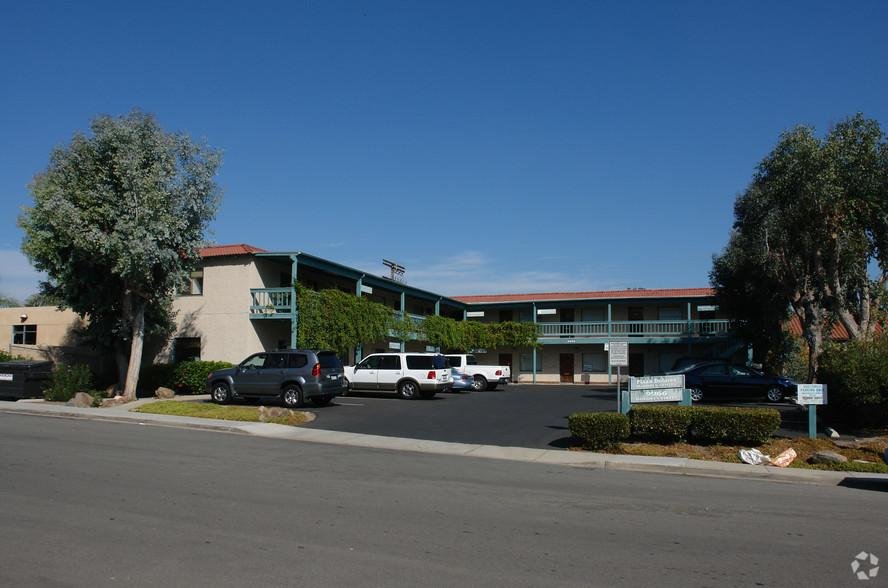
Total Views: 43 By Miriam Raftery June 20, 2019 (Spring Valley) – Seven people have been arrested following raids yesterday morning on three illegal marijuana dispensaries in the Casa de Oro area of Spring Valley. An abatement warrant and three search warrants were served at an office complex at 9966 Dolores Street in units 102, 108 and 208. Sheriff’s deputies found over 600 pounds of marijuana along with marijuana edibles, drug paraphernalia, $21,000 cash, and four firearms. The operation was conducted by the Sheriff’s Rancho San Diego Crime Suppression Team and detectives from Rancho San Diego and Imperial Beach, along with the East County Street Team and County Code Compliance. The actions were taken as a result of numerous complaints from concerned citizens. Seven employees were charged with possession and sales of marijuana. Two were also charged with possession of methamphetamine and cocaine. County Code Compliance officers secured the illegal dispensary at unit 102, boarding up all entry doors. In California, while possession of small amounts of marijuana for personal use is legal, each jurisdiction within the state has the right to establish its own rules regarding sales. While the city of San Diego has legalized recreational and medicinal marijuana sales through licensed dispensaries, the County of San Diego has banned all marijuana sales in unincorporated, except for a location near Gillespie Field in El Cajon that was grandfathered in and another in Ramona that was in the pipeline when the ban was adopted. In East County, no communities have legal recreational dispensaries to date, though La Mesa has licensed medical marijuana dispensaries now open. Consumers seeking cannabis products that meet state safety standards should avoid illegal dispensaries, where products may be tainted or adulterated. County departments are addressing illegal marijuana dispensaries in Spring Valley and other unincorporated areas of San Diego County by enforcing building code requirements involving illegal or improper occupancy in conjunction with the administrative abatement process. The County has begun serving illegal dispensaries with 10-day notices, ordering property owners to remove tenants involved in the illegal sales of marijuana. If the tenant is not removed and enforcement action is taken, the County will continue abatement proceedings and secure the property to ensure the building remains safe. Any person found inside the property after the County secures the building is subject to being arrested. The public can report illegal operations by calling Crime Stoppers at (888) 580-8477 with information and you will remain anonymous. You may be eligible for up to a $1,000 reward for information leading to a felony arrest. Printer-friendly version
5.2K viewsSHERIFF SHUTS DOWN ANOTHER ILLEGAL POT SHOP IN SPRING VALLEY 6.3K

Total Views: 57 By Miriam Raftery June 21, 2018 (Spring Valley) – The Gas House 64 marijuana dispensary at 8818 Troy Street is the latest of many illegal pot shops to be shut down in Spring Valley. Although marijuana use is legal in California, new marijuana dispensaries are illegal in the unincorporated parts of San Diego County. Rancho San Diego Sheriff’s deputies served an abatement notice on the dispensary’s owners yesterday morning for violating a zoning ordinance. Large amounts of marijuana, marijuana edibles, paraphernalia and other items were seized, though no arrests were made. Deputies boarded up the windows and put a temporary fence up to secure the site. The County has begun serving illegal dispensaries with 10-day notices, ordering property owners to remove tenants involved in the illegal sales of marijuana. “If the tenant is not removed and enforcement action is taken, the County will continue abatement proceedings and secure the property to ensure the building remains safe,” says Sergeant Matt Cook IIII. “Any person found inside the property after the County secures the building is subject to be arrested.” Marijuana dispensaries, both recreational and medical, are legal in the city of San Diego with appropriate permits. Medical marijuana sales have been legalized by voters in Lemon Grove and La Mesa, though no dispensaries have yet completed the approval process. The County has one dispensary in unincorporated El Cajon that was grandfathered in when Supervisors outlawed future dispensaries from opening. Printer-friendly version
6.3K viewsSHERIFF SNUFFS OUT MARIJUANA DISPENSARIES IN SPRING VALLEY 5.5K

Total Views: 28 East County News Service May 10, 2018 (Spring Valley) – The Sheriff’s department today announced it has begun serving 10-day notices on illegal marijuana dispensaries in Spring Valley and will arrest violators who don’t vacate the premises. The action comes after the Sheriff and County Planning and Development Services served over a dozen search warrants on illicit dispensaries from mid-2017 to early 2018 on Spring Valley pot shops, seizing 7,000 pounds of marijuana, five firearms and $85,000 in cash. “Historically, dispensaries frequently re-open shortly after enforcement action, despite fines and/or criminal prosecution,” says Lieutenant Tom Seiver. “To help address this, the County’s Sheriff’s Department and Planning & Development Services have begun enforcing building code requirements that will result in securing the buildings if a dispensary does not shut down, which will make it more difficult for illegal dispensaries to continue operating.” The departments are addressing illegal marijuana dispensaries in Spring Valley and other unincorporated areas by enforcing building code requirements involving illegal or improper occupancy in conjunction with the administrative abatement process. According to Siever, the County has begun serving illegal dispensaries with 10-day notices, ordering property owners to remove the illegal use. If the violation is not removed and enforcement action is taken, the County will continue abatement proceedings and secure the property to ensure the building remains safe. Any person found inside the property after the County secures the building will be arrested. “In the past few weeks, three illegal dispensaries complied with the order before being abated. A fourth illegal dispensary has already been served and must comply by next week,” says Siever, who adds, “The County anticipates continued compliance as we enforce the securing of structures without a permitted use.“ Printer-friendly version
5.5K views