
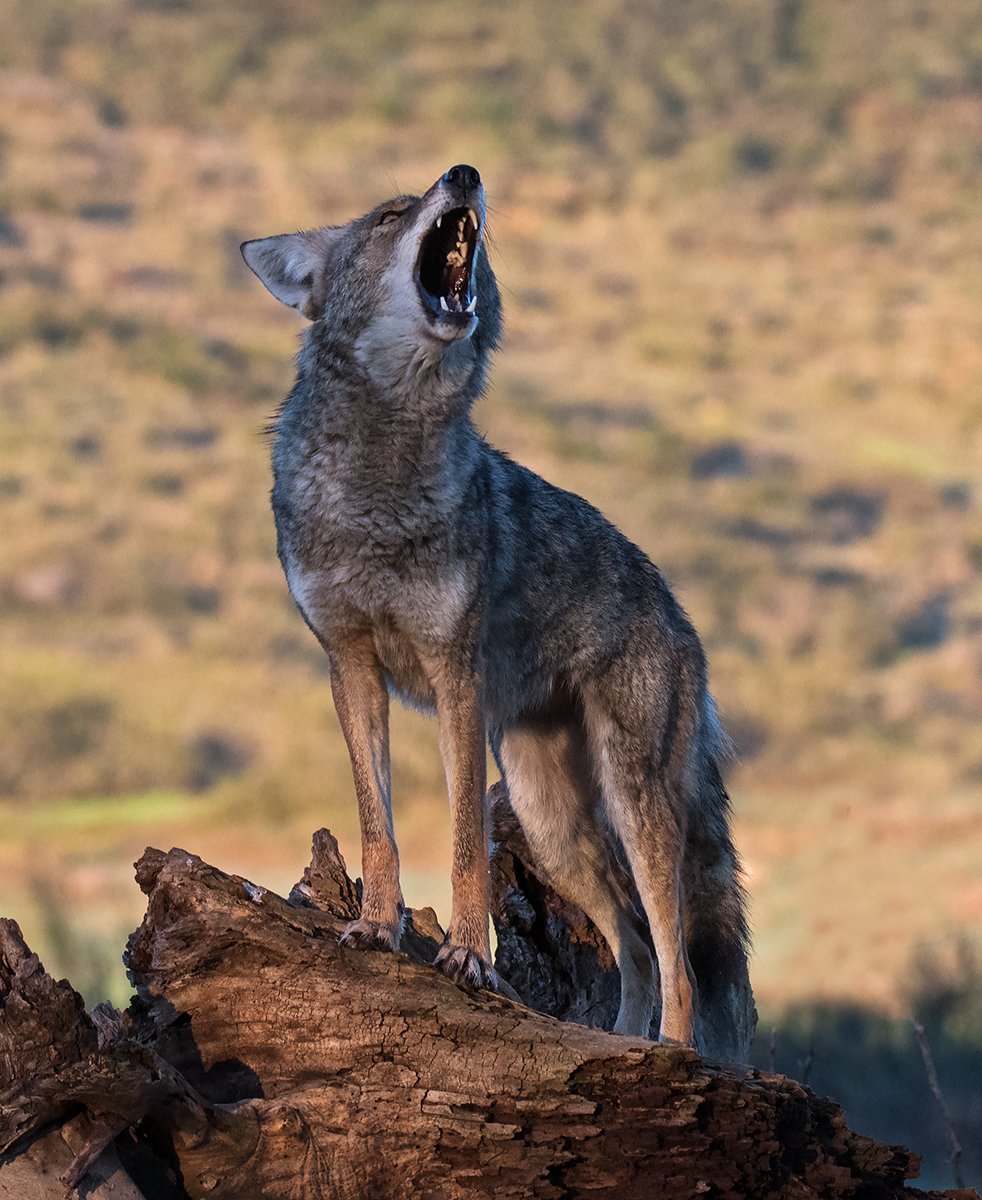
Photo of local San Diego County coyote by Debbie Ekhaml taken at the San Diego National Wildlife Refuge in Jamul
By Karen Pearlman
May 30, 2026 (San Diego County) – There may be sweeping changes coming to public lands across the United States that could deeply impact precious wildlife preserves such as the San Diego National Wildlife Refuge. The proposal would make more than 92 million acres, or more than 95 percent of National Wildlife Refuge System lands, available for hunting and fishing, according to a press release from the U.S. Fish and Wildlife Service.
Earlier this week, the U.S. Department of the Interior announced the largest proposed expansion of hunting and sport fishing opportunities in the history of the United States Fish and Wildlife Service, which manages more than 2,000 species across more than 850 million acres — more than twice the size of Alaska’s 586,412 square miles.
The federal government is seeking to add or broaden more than 1,450 hunting and fishing opportunities across 111 field stations, including 107 national wildlife refuges and four national fish hatcheries, across 32 states.
In a media release, U.S. Fish and Wildlife Service Director Brian Nesvik called hunting and fishing “traditional recreational activities that bring families and communities together.”
Nesvik, a former game warden from Wyoming, said that many national wildlife refuges, national fish hatcheries and other Fish and Wildlife Service lands and waters offer hunting and fishing access that “helps boost local economies and affords high-quality publicly available recreational opportunities to all Americans.”
“We are pleased to continue to increase access for hunters and anglers while fulfilling our conservation mission, and we are committed to responsibly managing these areas for the benefit of future generations,” he said.
According to the most recent National Survey of Fishing, Hunting and Wildlife-Associated Recreation, published in 2023, nearly 40 million Americans fish and 14.4 million hunt, contributing $144 billion each year to the national economy.
A news release from the DOI earlier this month noted that “this would marking a significant milestone in expanding public access to America’s lands and waters and reinforcing the Administration’s commitment to outdoor recreation, conservation and rural economic growth.”
The effort advances President Donald J. Trump’s priorities to expand access to public lands and reduce unnecessary regulatory burdens, including Executive Order 14192, also known as “Unleashing Prosperity Through Deregulation.”
It also moves on Secretary’s Order 3447 which will remove barriers to hunting and fishing access and better align federal regulations with state wildlife management frameworks.
The National Park Service (NPS) will simultaneously remove 114 regional, park-specific restrictions across 36 authorized units, effectively aligning hunting regulations with state laws. The National Park System includes more than 430 units preserving America’s most significant natural, cultural and historic resources.
SO 3447 will shift policy to allow hunting in specific areas where it is already legally permitted, removing extra barriers like specialized permits and localized trail buffers.
The updates support broader efforts to expand recreational access, remove unnecessary barriers and ensure greater consistency across DOI-managed lands and waters.
The DOI news release notes that the changes “support jobs, fund conservation efforts and sustain outdoor traditions that connect communities to the land and to each other.”
Additionally, the release shared that “hunting and fishing also provide important sources of protein for many people, which supports the Trump Administration’s updated Dietary Guidelines that puts real food back at the center of preventing chronic disease and promoting lifelong wellness.”
National Park Service and local changes
According to a news release from the NPS, changes affect National Park-specific hunting requirements that were identified for removal because they duplicated state wildlife regulations, repeated existing federal requirements or imposed restrictions beyond what was necessary to comply with law or for public safety or resource protection.
By removing outdated or duplicative requirements, the NPS is making it easier for hunters to understand applicable rules while respecting the primary role of states in wildlife management.
Below right, photo of local San Diego County coyote by Debbie Ekhaml taken in the San Diego National Wildlife Refuge
In the NPS news release, Jessica Bowron, comptroller, exercising the delegated authority of the director of the NPS, said that “Americans should be able to access and enjoy their public lands without navigating unnecessary layers of bureaucracy.”
“These changes remove duplicative requirements and expand access where appropriate, while ensuring the National Park Service continues to meet its responsibility to protect the extraordinary natural and cultural resources entrusted to our care,” Bowron said.
In San Diego County, the San Diego National Wildlife Refuge is the primary refuge affected by the DOI’s plans to expand recreation plans.
The National Wildlife Refuge System, established to conserve fish, wildlife and plant resources, is the world’s largest network of lands and waters dedicated to wildlife conservation. The system includes 573 national wildlife refuges and 38 wetland management districts, with more than 71 million visitors each year.
National wildlife refuges provide vital habitat for thousands of species while also offering high-quality recreational opportunities, including hunting, fishing, wildlife observation, photography and environmental education.
The San Diego National Wildlife Refuge, established in 1996, spans nearly12,445 acres, stretching from Jamul to neighborhoods in Spring Valley and eastern Chula Vista. It is part of the U.S. Fish and Wildlife Service’s contribution to the San Diego Multiple Species Conservation Program, a regional effort to protect native habitats and species while supporting responsible development.
National look at federal land ‘restrictions’
Secretary of the Interior Doug Burgum said in a news release that “For too long, access to hunting and fishing on federal lands has been limited by unnecessary restrictions and disconnected federal rules.”
Burgum said that opening more land and aligning with state expertise puts “decision-making back where it belongs.”
“This is about commonsense access, supporting rural economies, and ensuring the next generation can experience the outdoors the same way so many of us did growing up,” he said.
The U.S. Fish and Wildlife Service manages hunting and fishing programs to ensure sustainable wildlife populations while balancing recreational access with conservation responsibilities. Hunting and fishing are permitted on refuges when determined to be compatible with each station’s purpose and mission under federal law.
The government is allowing for public comments on the proposed rule for 30 days, beginning with the May 27 publication in the Federal Register.
The notice is available at http://www.regulations.gov, Docket Number: FWS-HQ-NWRS-2026-1223, and includes complete details on the proposed hunting and sport fishing rule and how to submit comments.
Locals weigh in
In a social media post, Deb Merrill, a local wildlife photographer who lived adjacent to the San Diego National Wildlife Refuge, wrote, “The Nature Conservancy buys land to save it, then turns it over to F&G for ‘management.’ Except the ‘management’ almost always includes hunting. Those areas are far too congested with recreational users for this to be feasible. It’s nuts.
“Bad enough they allow hunting in Hollenbeck and there was also poaching in the SD National Wildlife Refuge in Jamul,” Merrill wrote. “I saw it, it was disgusting. Killing of deer, coyotes, taking of reptiles and plants like the Dudlea (Dudleya) that were then sold for big $. Guess the word ‘Refuge’ means nothing. $ means more.”